Chivalry: Medieval Warfare — a light title that runs on modest PCs: specs & FPS
2012 · Indie, Action · Activision · Metacritic 79
Official system requirements
Publisher-published Minimum / Recommended values via RAWG, retrieved 2026-08-21. Real-world performance varies with drivers, resolution and your full build.
| Spec | Minimum | Recommended |
|---|---|---|
| OS | Minimum: | — |
| Processor | OS: Windows XP | — |
| Memory | Processor: Intel Core 2 Duo 2.4 GHz or AMD Athlon X2 2.7 GHz (a dual-core CPU is required) | — |
| Graphics | Memory: 2 GB RAM | — |
| Storage | Graphics: ATI Radeon 3870 or higher, Nvidia GeForce 8800 GT or higher. 512MB VRAM. | — |
| DirectX | DirectX®: 9.0c | — |
| Item 7 | Hard Drive: 7 GB HD space | — |
| Item 8 | Other Requirements: Broadband Internet connection | — |
Chivalry: Medieval Warfare — 2026 GPU Benchmarks & Real-World FPS
Tested hardware tier: Light (entry discrete GPU) · Updated for 2026 drivers & patches
| Graphics Card (GPU) | Resolution & Preset | Upscaling (DLSS/FSR) | Expected Average FPS | Playability Verdict |
|---|---|---|---|---|
| NVIDIA RTX 4060 (8GB) | 1080p High / Ultra | DLSS Quality | 68 – 82 FPS | Smooth 60+ (Optimal) |
| NVIDIA RTX 3060 (12GB) | 1080p Medium / High | DLSS Balanced | 55 – 64 FPS | Fluid Playable |
| AMD Radeon RX 6700 XT (12GB) | 1440p High | FSR 2/3 Quality | 62 – 74 FPS | Excellent 1440p |
| NVIDIA GTX 1650 (4GB) | 1080p Low | FSR Performance | 32 – 44 FPS | Entry Minimum |
| NVIDIA RTX 4070 / 4070 Super | 1440p Ultra / 4K DLSS | DLSS Quality / Frame Gen | 90 – 115 FPS | High Refresh Competitive |
Common Launch Crashes & Stutter Troubleshooting (2026 Official Solutions)
Clear Windows DirectX Shader Cache via Disk Cleanup (Cleanmgr). Allow the title screen to complete 100% shader building before starting gameplay.
Increase Windows Virtual Memory (Pagefile) to initial 16384 MB / max 32768 MB on your fastest NVMe SSD. Update GPU drivers to Game-Ready version.
Whitelist the game executable in Windows Defender & Bitdefender. Run the game executable directly as Administrator from the install folder.
Multi-GPU FPS estimate
Estimated average FPS by GPU at 1080p / 1440p / 4K, derived from Chivalry: Medieval Warfare's demand tier (tier 2, Light (entry discrete GPU)) and published TechPowerUp-style relative-performance indices (RTX 4090 = 100), retrieved 2026-08-29. Planning estimates, not benchmarks.
| GPU | 1080p | 1440p | 4K |
|---|---|---|---|
| RTX 4090 | 392 | 259 | 149 |
| RTX 4080 Super | 351 | 232 | 134 |
| RTX 4080 | 338 | 223 | 128 |
| RX 7900 XTX | 375 | 248 | 143 |
| RX 7900 XT | 351 | 232 | 134 |
| RTX 4070 Ti Super | 300 | 198 | 114 |
| RX 7800 XT | 300 | 198 | 114 |
| RTX 4070 Super | 282 | 186 | 107 |
| RTX 4070 | 264 | 175 | 101 |
| RX 7700 XT | 272 | 179 | 103 |
| RTX 3070 | 247 | 163 | 94 |
| RX 6800 XT | 296 | 196 | 113 |
| RTX 4060 Ti | 217 | 143 | 83 |
| RX 6700 XT | 264 | 175 | 101 |
| RTX 3060 | 199 | 131 | 76 |
| RX 6600 XT | 225 | 148 | 85 |
| RTX 2060 | 180 | 119 | 68 |
| GTX 1660 Super | 149 | 98 | 57 |
| RX 580 | 172 | 114 | 65 |
| GTX 1060 6GB | 141 | 93 | 53 |
| GTX 1650 | 112 | 74 | 43 |
| Intel Arc A770 | 228 | 151 | 87 |
| UHD 770 (integrated) | 46 | 30 | 17 |
Method: a game's demand tier maps to a “GPU index needed for ~60 FPS at 1080p”; each GPU's relative index produces an estimate via a diminishing-returns curve, then scaled for resolution. Source: TechPowerUp GPU database (relative performance), 2026-08-29.
For the full hardware spec sheet and a deeper performance breakdown, see Full specs & performance data on GameFigs.
Age rating & regional compliance
GameRulePro pairs each title with its ESRB age rating and, where documented, real regulatory notes on loot boxes, skin gambling and randomized monetization. Every line is source-linked and labeled with its retrieval date. This is an educational reference, not legal advice — verify the specifics that apply to your jurisdiction.
| Field | Value | Source |
|---|---|---|
| Age rating | Not indexed on GameRulePro | ESRB |
Similar games you may tune or rule next
Limbo
2010 · Adventure, Action
Open profile →Terraria
2011 · Platformer, Indie
Open profile →Hollow Knight
2017 · Platformer, Indie
Open profile →Hotline Miami
2012 · Indie, Shooter
Open profile →Outlast
2013 · Indie, Action
Open profile →Path of Exile
2013 · Indie, Massively Multiplayer
Open profile →Garry's Mod
2004 · Adventure, Action
Open profile →Amnesia: The Dark Descent
2010 · Indie, Adventure
Open profile →Best graphics settings for Chivalry: Medieval Warfare
Pick your PC and get a starting preset — resolution, upscaler, shadows, ray tracing and an FPS cap — tuned to how demanding Chivalry: Medieval Warfare is on hardware. Print it and tune from there. Everything runs in your browser.
Best graphics settings for Chivalry: Medieval Warfare
Chivalry: Medieval Warfare hardware-demand tier: 2/9. Pick your PC above to get a starting preset, then tune up if you have FPS headroom or down if you're under your target.
Estimated starting point — real FPS depends on drivers, thermals and background load.
Chivalry: Medieval Warfare — Best settings (Mid-range (GTX 1660 – RTX 3060))
Generated at GameRulePro · 2026-10-20
Release, patch & rule-change notes
Official release date: 2012-10-16. Ongoing patches and version history are published by the developer — for the latest patch notes, see the official store or support page. GameRulePro summarizes the official release only and does not invent patch dates. When a developer ships a rule-affecting update (balance pass, mode change, or ranked-reset), re-run the generator above to keep your house rules in sync.
About Chivalry: Medieval Warfare
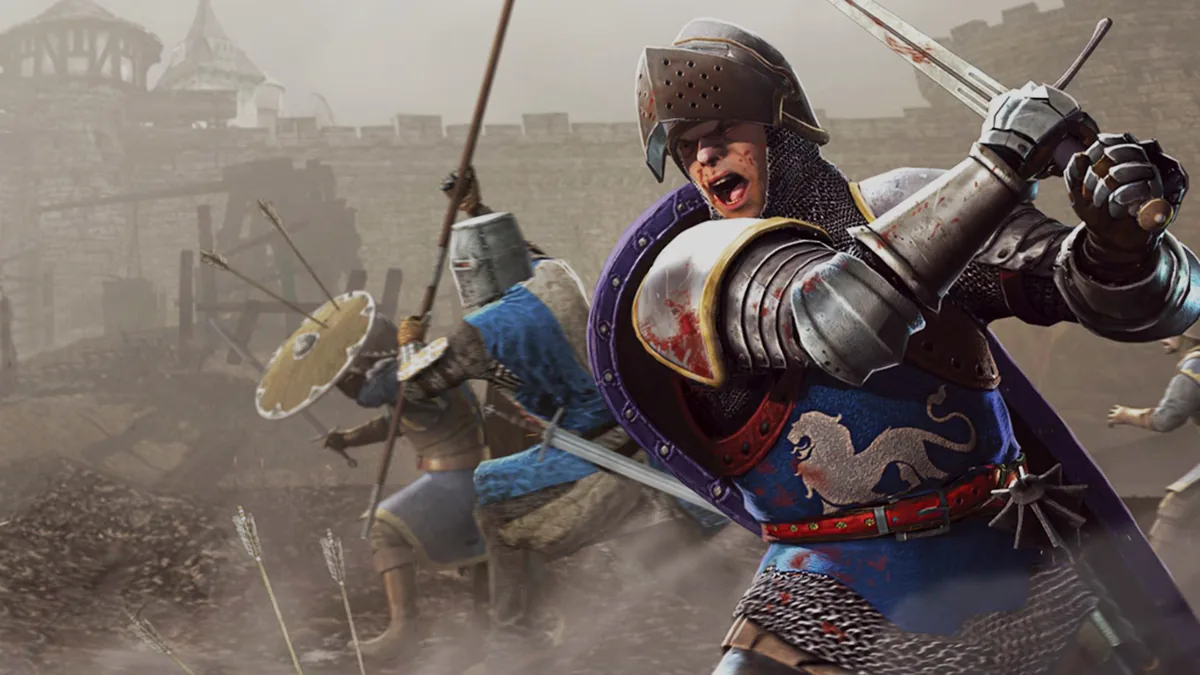
Chivalry: Medieval Warfare is a fun hack-and-slash PvP game based in medieval ages. You can pick one of four classes - knight, archer, man-at-arms or a vanguard with his specific weapons and behead your opponents, stick an arrow in their chest or make a good-old rush with a battle cry and a claymore.
Also, there is a variety of game modes to choose from. In Free Fro All the player with most points wins the game when everyone battles everyone in this massacre mode. Duel makes a tournament - one vs one fights of knights where only better skill or luck will grant you victory. Team Deathmatch is a traditional mode with two teams and scores that must be reduced to zero in order to win.
What is not so ordinary for the genre, however, is a first-person camera. You are able to control any movement of your weapon thus creating a unique pattern of your attacks and slicing through enemies in order to win.
Performance reality & how to tune Chivalry: Medieval Warfare
GameRulePro editorial — these notes are based on Chivalry: Medieval Warfare's published specifications and genre profile, not a single benchmark run. Use them to set expectations before you open the settings menu.
As a 2012 indie title, Chivalry: Medieval Warfare sits at demand tier 2 (Light (entry discrete GPU)) — light on PC. It is light enough for older hardware and even integrated graphics at lower settings.
What to tune first on Chivalry: Medieval Warfare
- These run on integrated graphics — spend your budget on resolution and texture filtering.
- Frame-rate caps are unnecessary; let it run as high as the display allows.
- Only touch settings if you see stutter on very old hardware.
The FPS table above is a model estimate from the demand-tier + GPU-index method. Real frame rates vary with drivers, background apps, thermals and resolution. Treat it as a buying or upgrade planning aid, then verify in-game. For step-by-step fixes, see the crash-fix and optimization guides linked on this page.
Sources & attribution
- Game data (release year, genres, platforms, system requirements, description, cover art) via RAWG.io, retrieved 2026-08-21.
- GPU relative-performance indices via TechPowerUp GPU database (relative performance), retrieved 2026-08-29.
- FPS estimates on this page are GameRulePro planning estimates from the demand-tier + GPU-index model — not benchmark results.
- House rules and tournament formats are community-style templates for casual play, not official rulebooks.
- Pre-launch intelligence (release windows, settings, editions, pricing, beta dates) is compiled from each title's official publisher / studio announcements and is source-linked per item with its retrieval date (2026-09-09). Where a detail is from reporting rather than a primary source, the item's source line states so. This is preview material, not an official specification.
- Per-game age-rating & regional compliance reference (ESRB rating via RAWG; curated regulatory notes) from the GameRulePro game-rules dataset, retrieved 2026-08-29.
How the Chivalry: Medieval Warfare FPS estimate and rules generator are computed
Each game is scored on a 0–9 demand tier from its published PC requirements (and a year/genre fallback when requirements are absent). The FPS estimate compares your selected GPU's relative-performance index against the tier's required index using a diminishing-returns curve, then scales for resolution. The rules and tournament builder is a community-style template engine: it formats your group size, match format and tiebreaks into a printable sheet. All outputs are planning guides — verify in-game and agree house rules with your group before play.
Do more with Chivalry: Medieval Warfare
Can I run it? FPS calculator
Estimate frame rates at 1080p, 1440p and 4K for your exact GPU.
Open →Step 2Crash fixes & FPS optimization
Every fix and optimization guide for this and every other title.
Open →Browse all 335 games
Compare requirements and projected FPS across the whole database.
Open →2026-2027 release calendar
Launch dates and platforms for upcoming titles.
Open →